


In Morocco, I Can Recognize a Table by Its Glasses

 AI-generated
Article
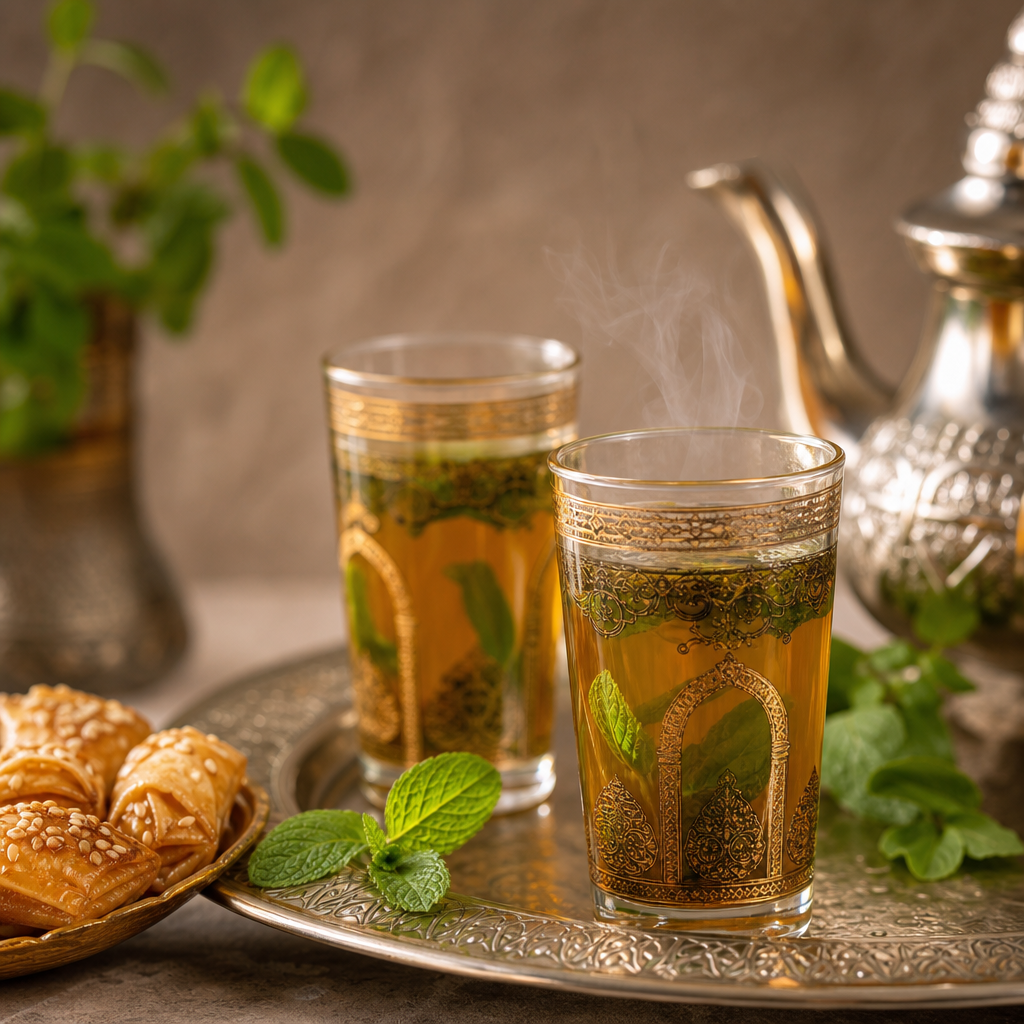
I often notice that in Morocco, drinks are not merely there to accompany a meal: I see them as a way of opening the door, setting the mood and taking one’s time. At an evening near the Marrakech medina, what struck me was not a perfectly staged setting, but the precision of the gestures: mint tea arrives as a genuine language of welcome—piping hot, very sweet, poured from high above to create foam. I use it almost as a local aperitif, because it prepares the palate, slows the pace and already sets the tone for the conversation. When I want to keep things simpler and more everyday, I also think of freshly squeezed orange juice, so prevalent throughout the country, or avocado milk juice, thick and nourishing, which I find ideal when I am looking for a gentle break rather than mere refreshment. Then, depending on the occasion, I also distinguish celebratory drinks from those enjoyed more discreetly. In some homes, in city restaurants or at more festive meals, I come across Moroccan wines that reveal another side of the country, with estates notably around Meknes or Benslimane. I do not associate them with mass consumption, but with thoughtfully chosen meals, at a table where people take the time to talk. As for spirits, mahia remains, in my view, the most distinctive reference: I encounter it in very specific settings, often in small quantities, after a meal or during a more intimate moment of sharing. I prefer this sense of moderation and context to anything showy, because it reflects something that feels like me: sincere conversations move me more than flawless displays, and I find in these glasses a form of simple, almost artisanal truth. If I had to sum up my LaBouffe tips for Moroccan drinks, I would say that I first choose what suits the moment. I serve mint tea when I want to welcome people and get the conversation flowing again; I keep orange juice or avocado milk juice for a more nourishing break; and I reserve a Moroccan wine or mahia for a celebratory meal where the atmosphere matters just as much as what is in the glass. I also enjoy observing how aromas move through these drinks: mint, orange blossom, sometimes verbena or citrus, create a very clear sense of the country, its climate and its customs. In my bookseller’s mental notebook, with its sketched plants and slightly vintage drawings, these drinks always have a face, a season and a way of being shared. That is probably why I find them so expressive: they tell the story of Morocco quietly, with warmth, restraint and a genuine sense of hospitality. Alcohol abuse is dangerous to your health. Drink in moderation.
Information
Where: Maroc